Paper Princess's Fantasy Life
Libii HK LimitedEducational
3.7461.00 Reviews
- Version
- 1.3.9
- Installs
- 10.00M
- Age Rating
- Everyone
Screenshots
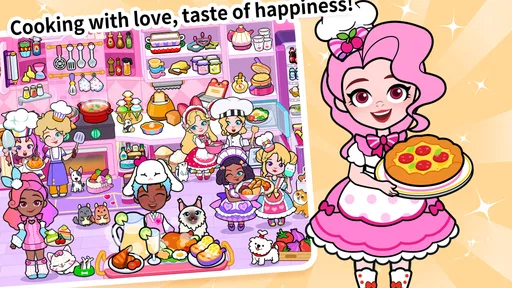
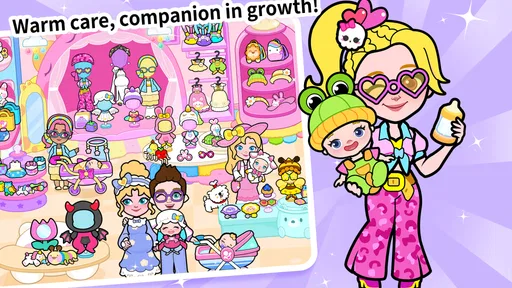
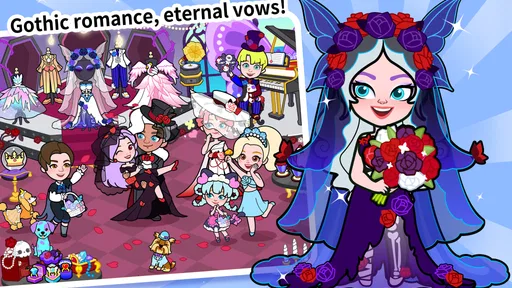
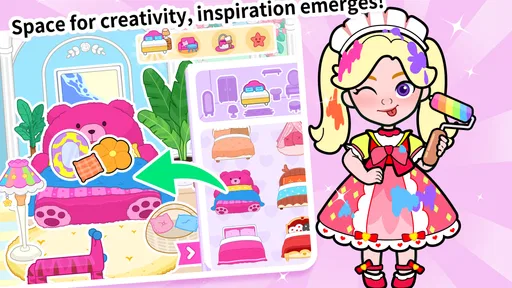
Our Review of Paper Princess's Fantasy Life
 Analysis by Appyee
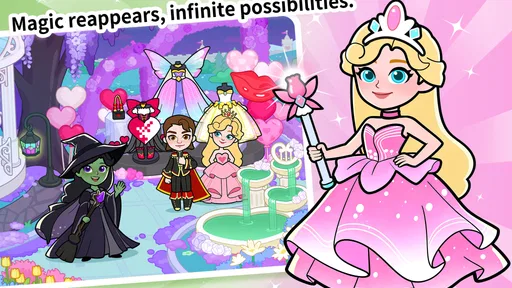
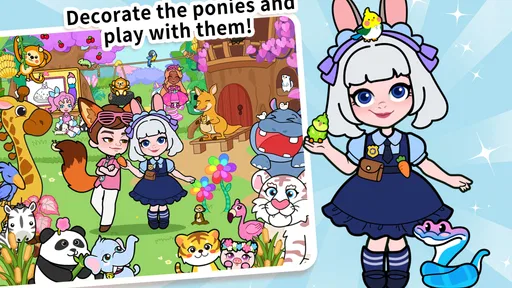
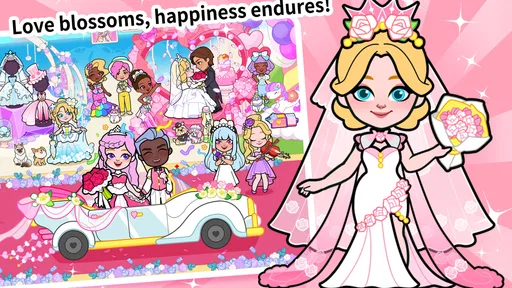
Paper Princess's Fantasy Life is the kind of educational game I would hand to a child who enjoys dressing up, decorating rooms, and making small creative choices without being pushed into a complicated ruleset. Its central appeal is simple: it turns a paper-princess fantasy world into a playful space for choosing, arranging, and imagining. After spending time with it, I found that its real strength is not deep strategy or a demanding challenge, but the way it gives children a gentle creative routine.
That distinction matters. I would not recommend it as a replacement for a structured learning app, a reading program, or a serious puzzle game. I would recommend it as a calm, accessible activity for children who like visual play and want to feel in control of a little story world. The experience is free to start, rated for Everyone, and developed by Libii HK Limited. It has attracted over ten million installs and holds a 3.7 average from around twenty-one thousand ratings, which suggests broad interest but also a fairly mixed response.
Creative choice is the capability that defines the experience
The most important capability here is the freedom to shape a fantasy life through small decisions. Instead of asking the player to memorize facts or master difficult controls, the game places emphasis on selecting, arranging, and expressing a personal idea of what the paper princess's world should look like. I found that this makes each short session feel more like guided imaginative play than conventional gaming.
For a young player, choosing an outfit or changing the look of a setting can be meaningful even when the action seems minor to an adult. The child is practicing preference, comparison, and sequence: first deciding what fits the character, then considering how that choice feels in the surrounding scene. Those are modest skills, but they are easier to engage with when they are wrapped in a bright fantasy setting rather than presented as an exercise.
The game works best when the adult understands what it is offering. It is not primarily about winning. There is no reason to rush through it simply to reach an ending. The value comes from letting a child make choices, see the result, and revise the result when it does not match the picture in their head. The creative decision is the lesson, not a side activity.
I also like that this format can suit children who become frustrated by games with timers, complicated maps, or repeated failure. A child can approach the fantasy world at a comfortable pace and focus on the visual outcome. That makes it a useful option for a quiet break after school or for a short activity while traveling, provided the child is comfortable with the game's style and the available content.
What the paper-princess theme adds
The paper-inspired presentation gives the game a distinctive identity. It frames the fantasy setting as something crafted and arranged, which supports the feeling that the player is creating a little scene rather than simply controlling a character through obstacles. That theme is especially effective for children who enjoy pretend play, dolls, costumes, and storybook worlds.
In my experience, the theme also makes the activity easy to explain. A parent can say, “Let’s see what kind of life you want to create for the princess,” and the child immediately understands the invitation. That is more useful than it may sound. Games for younger players often succeed when their purpose is obvious within a few seconds, and this one communicates its imaginative focus quickly.
Still, the same theme will not appeal to everyone. Children who prefer vehicles, animals, construction, action, or logic puzzles may find the princess setting too narrow. Even within the educational category, this is a specialized choice rather than an all-purpose learning tool.
How it feels during an ordinary play session
The first thing I noticed is how approachable the experience feels. The design is aimed at immediate visual interaction, so a child does not need a long explanation before trying it. That makes it suitable for shared play: I can let a child explore independently, then step in when they want help deciding between choices or building a small story around what they have created.
A typical session works well in short bursts. A child might begin by focusing on the princess, then move toward the surrounding fantasy life and spend time making the scene feel consistent. The important part is not the number of changes made, but the conversation those changes can create. Why does this outfit belong in that setting? What would the princess do next? Which version feels more like a celebration, a quiet day, or an adventure?
This is one of the less obvious strengths of the game: it can become a prompt for speaking and storytelling. If a child plays silently, it remains a visual activity. If an adult joins in, the same choices can encourage vocabulary, descriptive language, and simple narrative thinking. I would use it as a conversation starter rather than claiming that it teaches those skills directly.
For younger children, I would begin by playing alongside them once. That first shared session helps reveal whether they understand the interaction naturally and whether they are interested in the fantasy premise. It also gives the adult a chance to explain that changing a choice is part of the fun, not a mistake. This matters because children sometimes treat their first selection as permanent and become upset when the result does not look right.
A practical routine for parents and caregivers
One useful routine is to give the child a small creative brief before opening the game. Ask them to create a look for a rainy day, a royal celebration, or a visit to a favorite place. The prompt adds purpose without turning the activity into a test. When the scene is finished, ask the child to describe what happens next. I found this approach more rewarding than simply tapping through every option as quickly as possible.
Another helpful habit is to stop after a completed idea rather than treating the game as something that must fill a long period. A child can make one scene, talk about it, and move on to another activity. That keeps the game in its strongest role: a short creative exercise. It also reduces the chance that the experience becomes repetitive or that the child starts asking for every available item simply because it is visible.
Families should also pay attention to the commercial structure. The game is free to download, but optional in-app purchases range from ninety-nine cents to five dollars and ninety-nine cents per item. I would check the device's purchase controls before handing it over, especially if the child plays without direct supervision. The presence of optional purchases does not ruin the experience, but it is part of the practical decision about whether the game fits your household.
The best everyday scenario is a short, shared creative break
I think the strongest use case is a child who has twenty or thirty quiet minutes and wants something more interactive than watching a video. Imagine a child returning from school, needing a calm transition before homework, and choosing to create a new fantasy look for the princess. A parent can sit nearby, ask a few questions, and let the child take the lead. The game supplies the visual setting; the child supplies the decisions and the story.
That scenario works because there is no pressure to perform at an adult-defined level. The child can enjoy the activity alone, but the session becomes richer when someone shows genuine interest. I would especially suggest it for siblings or a parent and child who like comparing creative ideas. Each person can explain why a certain choice works, turning a simple play session into a gentle exchange of opinions.
It can also fit travel better than games that depend on intense concentration. A child can make progress through small choices and pause when needed. I would not assume that every part of the experience works offline, so I would prepare the device before a trip rather than discovering connectivity or download issues at the airport. That is a practical precaution, not a criticism of the game's creative design.
For classrooms or organized learning, I would be more selective. The game may work as an optional creative station or as a prompt for describing characters and settings, but it does not provide the same structure as an app built around literacy, mathematics, or language practice. A teacher looking for measurable lessons should choose a dedicated educational product instead.
Where it sits beside familiar alternatives
Compared with dress-up games that focus mainly on collecting looks, this experience feels more connected to a broader fantasy-life idea. The player is not limited to making a character look attractive; the appeal comes from imagining how that character exists within a crafted world. Compared with puzzle-based educational games, however, it offers less direct mental challenge and less obvious progression through skills.
That trade-off is important for parents choosing between categories. If the child needs practice with counting, spelling, memory, or problem-solving, a focused learning app will likely be the better choice. If the child needs a low-pressure creative outlet and responds strongly to princess stories, Paper Princess's Fantasy Life may be more successful because it meets the child where their interests already are.
It also differs from open-ended drawing apps. Drawing tools can offer more freedom, but they may feel demanding to a child who does not yet know what to create. This game provides a ready-made character and setting, so the child can concentrate on choices within a clear frame. The cost of that convenience is that the creative range is narrower than a blank canvas.
The tradeoffs become clearer over longer use
The biggest limitation is that the novelty depends heavily on the child's interest in the theme. A child who loves princess role-play may return often, while another may explore the available choices once and move on. I would not buy a device or plan a daily routine around this one game unless I had already seen that the child enjoys this type of imaginative play.
The 3.7 average rating reflects that it is not a universally satisfying experience. I read that number as a reminder to keep expectations realistic. The game has a large audience, but popularity does not turn a focused dress-up fantasy into a complete educational curriculum. Its strengths are narrow and clear, and its weaker areas follow from that narrow focus.
There is also a difference between “educational” in a broad developmental sense and “teaching a defined subject.” The game may encourage choosing, describing, pretend play, and visual organization, but I would not use it to replace practice material. Parents should judge it as creative learning through play, not as a lesson app with a syllabus.
Optional purchases are another point of friction. Even when a child can enjoy the free starting experience, visible locked content may affect how they feel about the session. I recommend setting a simple family rule before play: the child can explore what is available, but purchases require an adult's permission. That conversation is easier before disappointment appears on the screen.
Device compatibility is reasonably broad for an Android game, since the current version, 1.3.9, requires Android 6.0 or later. I would still check the device's available storage, screen responsiveness, and parental controls before installing it for a child. A game designed around visual selection is much less enjoyable when the screen is small, laggy, or difficult for little fingers to use.
When I would skip it
I would skip this game for a child who wants competitive goals, complex puzzles, fast action, or a clear reward ladder. I would also choose something else for a child who becomes fixated on locked items or repeatedly asks to buy additional content. In those situations, a simpler offline creative activity, a drawing app, or a subject-focused educational game may create less friction.
I would also avoid presenting it as a reward for completing academic work if that makes the child view creative play as another performance task. It is better suited to a relaxed moment where the child can experiment. The game loses some of its charm when an adult dictates every choice or turns the result into a judgment about taste.
Who gets the most from this fantasy-life format
The best match is a young player who enjoys princesses, costumes, room-like scenes, and storytelling through appearance. That child is likely to understand the appeal quickly and may use the game as a springboard for imaginary conversations. A caregiver who is willing to ask questions and listen will get more value from it than someone looking for a completely hands-off babysitting tool.
It can also suit children who are cautious with unfamiliar games. The gentle premise and visual choices provide a less intimidating entry point than games that begin with enemies, timed tasks, or complex instructions. I would introduce it in a short session, then watch whether the child explores independently or needs constant direction. That response tells you more than the category label alone.
Older children may find the experience too simple unless they enjoy using it as a storytelling prompt. For them, the game could work alongside writing or drawing: create a character, invent a situation, and then continue the story outside the app. Without that extra layer, the limited challenge may become apparent quickly.
The developer, Libii HK Limited, has positioned this release as a free experience for a broad audience, and the Everyone rating supports its family-friendly presentation. Even so, “Everyone” should not be treated as a substitute for parental judgment. I would still review the purchase settings and play a little first, particularly when the child is very young.
My final view is positive but specific. Paper Princess's Fantasy Life is most successful as a guided imagination tool. It gives a child a colorful framework for making choices, changing ideas, and talking about a character's world. It is not the right pick for serious academic practice or demanding gameplay, and the optional purchases deserve sensible boundaries. But for a child who genuinely enjoys princess fantasy and needs a calm creative activity, I would recommend trying it free before deciding whether it deserves a regular place on the device.
Verdict
Strengths of Paper Princess's Fantasy Life
- Creative dress-up options encourage imaginative play.
- Relaxing activities suit children who prefer noncompetitive gameplay.
- Bright visuals and friendly characters are appealing to younger players.
- Simple controls make most activities easy to understand.
- Frequent customization keeps the experience feeling personal.
Limitations of Paper Princess's Fantasy Life
- Some items or features may require in-app purchases.
- The gameplay can feel repetitive after extended sessions.
- Young children may need help navigating menus and choices.
- Limited challenge may not satisfy older or experienced players.
- Ads or purchase prompts can interrupt the play experience.
Other Releases by Libii HK Limited
View All
SuitU: Fashion Avatar Dress Up
Role Playing4.1
Similar Picks in This Category
View All
Little Panda Policeman
BabyBus4.0

Monster Trucks Game for Kids 2
Raz Games4.1

Little Panda's Chinese Recipes
BabyBus4.4

Little Panda's Restaurant
BabyBus4.4

Little Panda's Ice Cream Games
BabyBus4.3

Baby Panda Care
BabyBus3.8
Frequently Asked Questions
What is Paper Princess’s Fantasy Life?
Paper Princess’s Fantasy Life is a casual role-playing and dress-up game centered on exploring a colorful fantasy world, customizing characters, decorating spaces, and completing light activities. Its paper-inspired visual style gives the game a storybook appearance, while the relaxed gameplay is designed for players who prefer creativity, discovery, and simple interactions rather than demanding combat or complex strategy.
Is Paper Princess’s Fantasy Life suitable for children?
The game is generally aimed at children and casual players, thanks to its friendly characters, bright presentation, and non-intimidating activities. However, parents should still review the age rating, advertisements, in-app purchases, and any online features available in the current version. If children are playing on a shared device, parental controls are recommended to prevent accidental purchases.
Does Paper Princess’s Fantasy Life require an internet connection?
Some parts of Paper Princess’s Fantasy Life may work without a constant connection, particularly basic exploration and offline activities. Nevertheless, an internet connection can be required for downloading game resources, receiving updates, displaying advertisements, synchronizing progress, or accessing special content. For the most reliable experience, launch the game online at least once and check its permissions before playing offline.
Are there in-app purchases or advertisements in the game?
Paper Princess’s Fantasy Life may include optional purchases and advertising, depending on the platform, region, and version installed. These can be used to unlock cosmetic items, extra content, or other conveniences, but they are not necessarily required to enjoy the main experience. Before downloading, check the store listing and configure purchase restrictions if children will use the application.
What devices can run Paper Princess’s Fantasy Life?
The game is available for supported Android and iOS devices, but performance depends on the operating system version, available storage, memory, and graphics capability. Older phones or tablets may experience longer loading times, reduced smoothness, or compatibility limitations. It is best to verify the current requirements on the official app store and keep sufficient free storage for updates and additional game files.
Play our best games!


